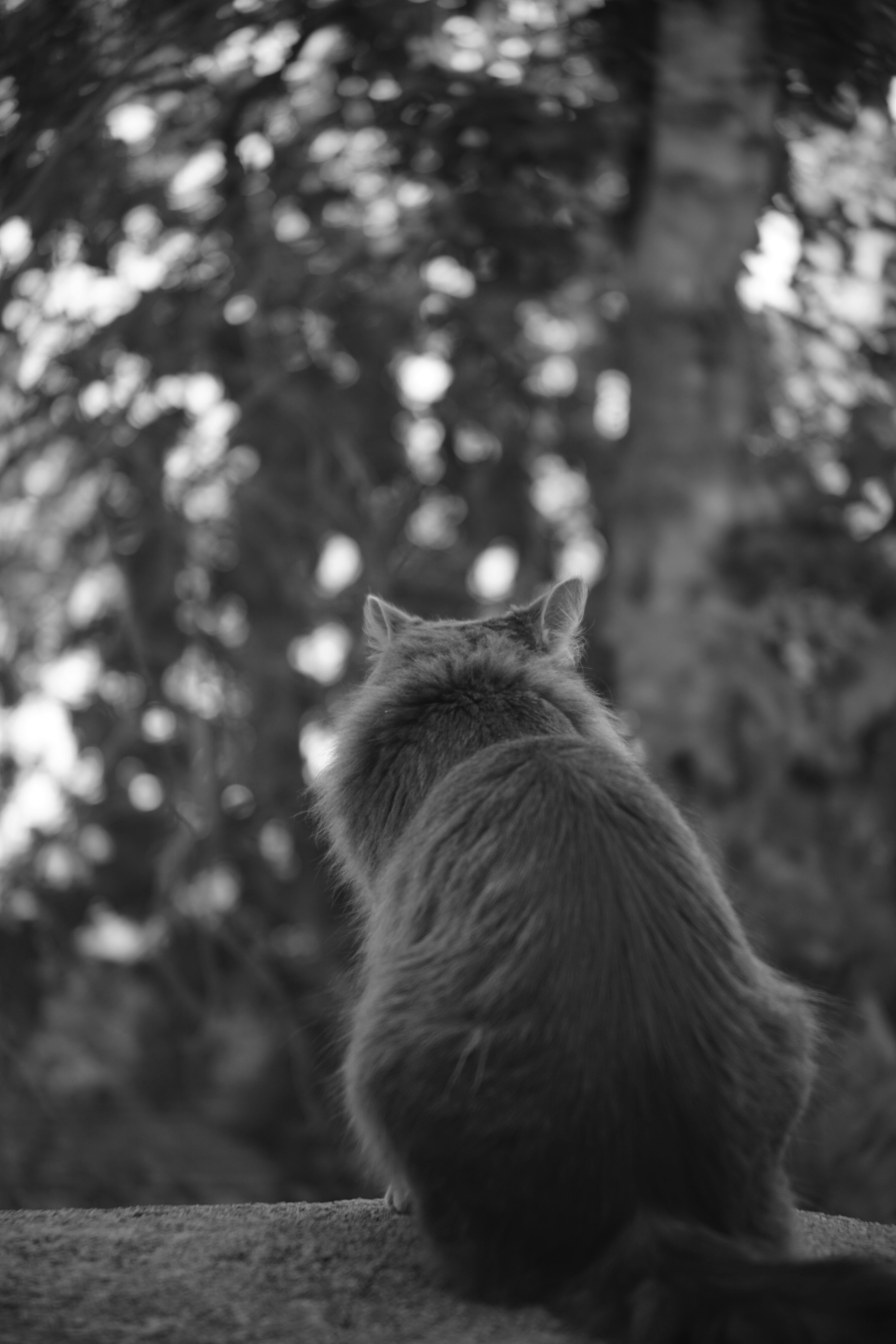
Many people have experienced this: you're looking at your cat, wanting to interact, and they slowly walk up to you, then turn around and leave you facing their back and rear end. If you're not familiar with how cats communicate, it's easy to interpret this as they can't be bothered with me, or even feel slightly offended. But in many cases, a cat willingly presenting their back to you isn't aloofness at all -- it's a very cat-like form of relaxation.
For cats, looking away and leaving their back exposed to another being inherently carries a degree of lowered alertness. They're not continuously watching you, nor preparing to defend or flee -- they've chosen to give you the side that doesn't need constant monitoring. This action doesn't always express emotion, but when it occurs during familiar, comfortable interactions, it shouldn't be immediately read as coldness.
From an Ethological Perspective: What Turning Away Means
In animal behavior science, exposing vulnerable areas to another individual is generally seen as a signal of trust or at least non-vigilance. A cat's back and tail area are relatively difficult to self-defend -- they can't simultaneously monitor an approach from behind. So when they actively choose to face their back toward you, they're essentially saying: "I don't need to watch you to ensure my safety."
Interestingly, this behavior is also observed among wild felines. Mother cats resting near their kittens often face outward with their backs toward the kittens, directing their vigilance toward potential threats while leaving the safe side for those they trust. When your cat sits with their back to you, the logic is actually similar -- they leave the "no vigilance needed" direction facing you and focus their attention on other possible changes.
This doesn't mean they're "protecting you" (a popular romantic interpretation but probably over-anthropomorphized). More accurately, they're simply making a positional choice that only occurs when their sense of security is high enough.
Why Facing Away From You Often Means Feeling Safe
When cats are on alert, they typically direct attention toward potential changes -- staring, ears rotating, body slightly tensed, ready to react at any moment. Conversely, if they're willing to sit next to you and even face their back toward you, it usually means they consider you not someone they need to constantly guard against. Similar to cats who dare to sleep beside you or display relaxed postures, it's all built on the premise of "this place is safe enough."
Some cats will even turn around before you reach out, gently bringing their rear end closer, as if controlling the pace of interaction themselves. They haven't fully left but are staying nearby in a less direct way. This behavior may look casual, but it fits the cat personality perfectly: I accept your proximity, but on my terms.
It's Not Always a Love Declaration -- Context Matters
Of course, rear-end toward you doesn't automatically mean trust 100% of the time. If the cat just happened to be passing, settling down to watch out the window, or simply treating you as part of the background, they may naturally end up facing away. The key isn't direction alone but their overall state. If the tail hangs naturally, ears are calm, body is soft, and they're willing to stay within arm's reach, it's likely comfortable. But if the tail flicks rapidly, ears press back, and the body is rigid, the signal isn't closeness but "please don't touch me right now."
Additionally, some cats suddenly turn around when you reach to pet them, presenting their rear. This isn't necessarily affection either. Sometimes they just want to avoid face contact, or they'd prefer you pet a different area than the back or tail base. What truly matters isn't romanticizing every action but understanding they're using posture to adjust interaction boundaries.
Back-Facing in Multi-Cat Households: Subtle Language Between Companions
If you have more than one cat, you might notice similar back-facing behavior between them. Two cats with a stable relationship can often sleep back-to-back or rest in the same space facing different directions. This posture indicates low tension between them -- no need to constantly monitor each other.
But if two cats have a tense relationship, you'll almost never see them leaving their backs exposed to each other. In a shared space, they'll typically maintain an angle where they can see each other, or simply keep enough distance. So observing whether cats are willing to face away from each other is actually a very practical indicator of multi-cat household harmony.
Returning to the human-cat relationship: if your cat not only sits facing away from you but also allows you to pet their back or tail base area while in that position, their trust level is quite high. Many cats who happily let you pet their face and chin won't necessarily accept being touched from behind. So those seemingly casual "butt-facing-you" moments sometimes carry more weight than you'd think.
How to Respond Without Scaring Away Their Trust
If your cat is calmly facing away from you, the best response usually isn't immediately picking them up, but first slowing down. You can speak softly, rest your hand where they can see or sense it, and gauge their reaction before deciding whether to pet. Most cats prefer starting with cheeks, chin, or the neck and shoulder area, rather than immediately targeting the tail base or playfully poking just because their rear is facing you.
If they just want to sit near you without extending the interaction, simply letting them be is a perfectly good response. Much trust isn't built through enthusiastic interaction, but through your repeated decisions not to disturb and not to misread. When a cat knows that turning around won't result in being grabbed or inappropriately touched, they're usually more willing to come closer next time.
It's a Very Cat Way of Saying "I Feel Safe Here"
Cats don't express relationships the way dogs do -- with direct, exuberant displays. Sometimes they come close not to perform intimacy, but simply to relax their body near you. Presenting their rear end may look a bit dismissive, but it might be exactly the evidence that they're willing to lower their guard. You don't need to read this gesture as deeply meaningful, but at least you can know: they don't see you as a threat, and that alone carries real significance.
Image Credits
- Cover and lead image:Back of a Brown Cat Sitting Outdoors - Pexels,攝影師 Ömer Faruk Uyar, license: :Pexels License